Baseball in White Leather Redwork
First Impression: Rustic Charm Meets Sporty Simplicity
When I unzipped the embroidery file for Baseball in White Leather Redwork, my first thought was: “This is a booth magnet.” It reads as warm, nostalgic, and quietly confident—not loud or cartoonish, but grounded in craft tradition. The redwork technique suggests hand-stitched authenticity, while “white leather” evokes clean texture and subtle luxury. It lands somewhere between farmhouse and modern sport—ideal for buyers who love heirloom quality with a playful wink. At a craft fair, where visual noise is high and attention spans are short, Baseball in White Leather Redwork stands out because it feels intentional, not trendy.
Where It Shines: Craft Fair Product Pairings
This design thrives on products that balance utility and display value. On a heavyweight cotton tote bag, Baseball in White Leather Redwork anchors the front panel beautifully—large enough to read from three feet away, detailed enough to invite closer inspection. As an apron embroidery, it works best centered above the pocket or subtly scaled down on the bib; the redwork’s clean lines hold up against kitchen wear and frequent washing.
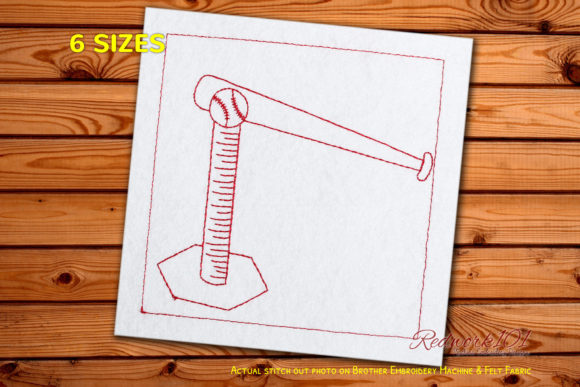
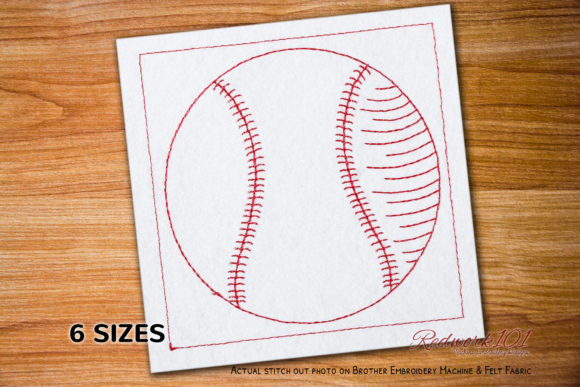
For tea towel embroidery, this design performs well when placed in the lower corner or along the hem—its white-on-red contrast pops against natural linen or oatmeal cotton, and the shape fits the vertical flow of the towel. As an embroidered patch, it’s highly versatile: sewn onto denim jackets, canvas market bags, or even kids’ backpacks. Just remember—the Box Stitch shown in the preview image is optional, and the outer box color varies across versions. If you’re batch-producing patches, skip the outer box unless it supports your brand palette.
On caps? Use caution. The baseball shape is round and friendly, but curved surfaces compress stitch definition. Test Baseball in White Leather Redwork on a scrap cap first—especially if using thick twill or structured fronts. For small pouches and pillow covers, scale it to 3–4 inches wide: it retains charm without overcrowding. And as a giftable handmade product—say, stitched onto a leather-look clutch or a linen drawstring bag—it elevates perceived value instantly.
Photography & Online Appeal: Etsy Seller Essentials
Baseball in White Leather Redwork photographs exceptionally well. Its limited color palette (primarily red thread on white or off-white fabric) ensures crisp contrast in natural light—critical for Etsy listings and printable mockups. Unlike busy multi-color designs, this one doesn’t compete with background textures or shadow play. It looks premium in flat-lay shots beside vintage gloves, wooden bats, or mason jars—making it easy to build cohesive design assets for social media or email banners.
That said, avoid placing it on dark fabric unless you’ve tested thread visibility thoroughly. Red thread on navy or charcoal can mute impact. Likewise, textured towels (like waffle-weave or terry) may soften stitch clarity—opt for smoother weaves like birdseye or brushed cotton for best results.
Production Realities: What This Machine Embroidery Design Demands
This isn’t a “stitch-and-forget” file. While the redwork style implies simplicity, Baseball in White Leather Redwork includes fine line work and tight curves around the stitching seams of the baseball. That means moderate stitch density—not overly heavy, but dense enough to define grain and contour. Always check spacing between parallel stitches; tight crowding can cause thread nesting on lightweight fabrics.
Hoop size matters here. You’ll likely need at least a 5×7 hoop for full-size placement on totes or aprons. For smaller applications—like a 2-inch patch—confirm the file scales cleanly without collapsing tiny details. Tiny lettering isn’t present, but the leather-texture suggestion in the title implies surface nuance; don’t over-stabilize and kill that softness. Use medium-weight cutaway stabilizer for structured items (caps, bags), and tear-away for tea towels and pillow covers.
Craft Fair Booth Strategy: Attention, Value, Repeatability
In person, Baseball in White Leather Redwork draws two distinct buyer types: sports fans seeking meaningful handmade goods (not mass-produced logos), and lifestyle shoppers drawn to tactile, story-rich pieces. It strengthens booth display strength by offering consistency—you can feature it across 5–6 product types while maintaining clear brand cohesion. That repeatability also supports batch production: once you dial in tension, stabilizer, and fabric pairing, you can confidently run 20+ units without redesign fatigue.
But don’t assume it sells itself. Place your strongest real mockup—a finished tote or apron—at eye level. Include a small printed tag that says “Redwork embroidery • Hand-finished detail • Made for fans & makers.” That bridges craft credibility with emotional resonance.
Careful-Use Notes Every Embroidery Designer Should Check
- Avoid dense stitch areas on highly textured or looped fabrics—test on scrap first.
- Don’t shrink below 2 inches wide: the baseball’s stitching lines blur and lose character.
- On curved surfaces (caps, pouches), reduce density slightly and verify thread coverage.
- Dark or black fabric requires high-contrast red thread—standard rayon may fade visually; consider metallic or matte cotton for depth.
- If using the optional Box Stitch, confirm whether it’s part of the core design or purely decorative framing—skip it on small-scale items unless it reinforces your layout.
Final Designer Notes Before You Cut Fabric
Before launching Baseball in White Leather Redwork into your craft fair lineup: test the embroidery file on your exact fabric type and thread colors; review spacing and jump stitches in your editing software; confirm hoop size compatibility with your machine; inspect stitch density for potential puckering; use the right stabilizer for each substrate; create at least one real finished product—not just a digital mockup; compare how it reads on white, cream, and light gray fabric swatches; and verify commercial licensing terms before selling any finished product. This isn’t just another sports embroidery—it’s a signature piece. Treat it like one.