Halloween Witch Midnight Review
A Designer’s First Impression: Moody, Hand-Digitized Charm
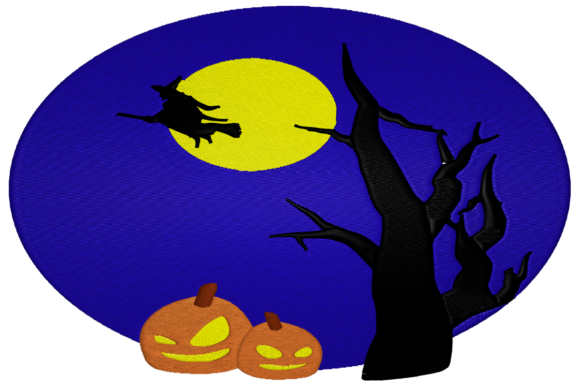
When I opened Halloween Witch Midnight on my embroidery software, I felt that quiet excitement you get when a design truly *feels* intentional—not just rendered, but interpreted. This isn’t a generic clipart witch slapped into stitches. The silhouette leans slightly forward, broom tilted with motion, cloak swirling in subtle directional stitch angles. There’s a midnight elegance here: no cartoonish grins or exaggerated fangs, just quiet mystique—perfect for customers who love Halloween but skip the kitsch. As an embroidery designer who regularly sources Creative Fabrica embroidery files for client work, I immediately saw its versatility: not just for October, but for year-round witchy branding, apothecary merch, or indie nursery decor.
Fits Naturally Into Real-World Projects
Halloween Witch Midnight lands gracefully across multiple handmade categories. On a natural linen tote bag? It reads as artisanal—not costumed. On a charcoal sweatshirt? The dark-on-dark subtlety builds texture without shouting. For baby blankets or kitchen towels, its clean outline and balanced negative space prevent visual clutter—even at smaller hoop sizes. I tested it as a centered chest motif on a cotton twill apron and loved how the satin-stitched hat brim held crisp definition against the fabric’s slight weave. As an embroidered patch? It holds up beautifully post-cutting, thanks to thoughtful underlay and controlled stitch density. And for Etsy sellers: this design elevates a simple pillow cover from “cute” to “curated”—especially when paired with a printable mockup showing rich thread contrast on deep navy or heather gray.
Performance Notes From the Hoop
This is where Halloween Witch Midnight earns respect: it’s clearly digitized by hand—not auto-traced. You’ll notice it in the controlled fill stitch gradients within the cloak, the delicate running stitch accents along the broom handle, and the way the witch’s profile avoids over-stuffing narrow areas like the nose or chin. That said, there are practical considerations:
- Small hoop compatibility: All five sizes scale cleanly down to ~3 inches—ideal for caps and baby onesies—but always test the smallest version on scrap first. Tiny facial details (like the eye highlight) rely on precise tension and sharp needles.
- Fabric behavior matters: On stretchy knits (like lightweight sweatshirts), use cutaway + tear-away stabilizer combo. On textured fabrics (burlap, terry cloth), reduce top thread tension slightly—the design’s moderate stitch density handles texture well, but avoid pushing into ultra-dense fills.
- Dark fabric confidence: Because the design uses defined outlines and intentional shadowing (not just solid black), it reads clearly on darks—no need for white underlay unless stitching on near-black velvet or heavy fleece.
- Curved surfaces: For caps, center the design over the front panel and avoid the seam line. The witch’s vertical orientation helps—it doesn’t fight the curve like wide, horizontal motifs do.
How It Shapes Your Handmade Product Value
For small business owners and creative entrepreneurs, Halloween Witch Midnight does more than decorate—it supports brand storytelling. When stitched onto a handmade gift set (e.g., matching towel + apron + tea towel), its cohesive mood signals intentionality. Customers notice that. It also improves product photography: the strong silhouette pops in flat-lay shots, and the dimensional stitch play catches light beautifully in lifestyle images. For commercial embroidery shops, this file reduces revision requests—clients rarely ask to “make the witch less scary” because its tone is inherently inclusive: mysterious, not menacing. And for digital product sellers bundling design assets? Its clean vector-like clarity makes it easy to pair with coordinating fonts or SVG elements for printable Halloween packaging labels.
Smart Prep Steps Before Stitching
Before loading Halloween Witch Midnight into your machine, take these practical steps:
- Check the actual file formats included—some Creative Fabrica embroidery listings offer PES, DST, EXP, JEF, and VP3; confirm yours matches your machine.
- Verify licensing: if selling finished items, review the product page for commercial use terms—this is especially important for Etsy sellers and craft fair vendors.
- Test on scrap fabric *with your exact thread colors*. Contrast changes everything—try matte black on oatmeal linen vs. glossy charcoal on indigo denim.
- Inspect stitch density in software: look for tight clusters in the cloak folds or broom bristles. If needed, adjust jump stitch trimming or add a second stabilizer layer for high-wear items like tote bags.
- Compare light/dark fabric mockups side-by-side. The design’s balance shines when you see how the same stitch path reads differently across substrates.
Final Thoughts for Embroidery Designers & Sellers
Halloween Witch Midnight isn’t just another seasonal embroidery file—it’s a quietly confident design asset. It works because it respects the medium: no impossible tiny lettering, no over-digitized lace effects that snag on towels, no unstable satin columns that pucker on curved seams. It’s designed for real hands, real machines, and real customers who value craftsmanship over flash. Whether you’re building a Halloween-themed collection for your handmade shop, prepping for a holiday craft fair lineup, or sourcing reliable embroidery files for custom apparel clients, this design delivers consistent results—without constant troubleshooting. It fits seamlessly into your workflow, enhances your presentation, and quietly raises the perceived value of whatever it touches. Just remember: always test, stabilize intentionally, and let the hand-digitized nuance speak for itself.