Hello Wine
First Impression: Effortlessly Charming, Instantly Relatable
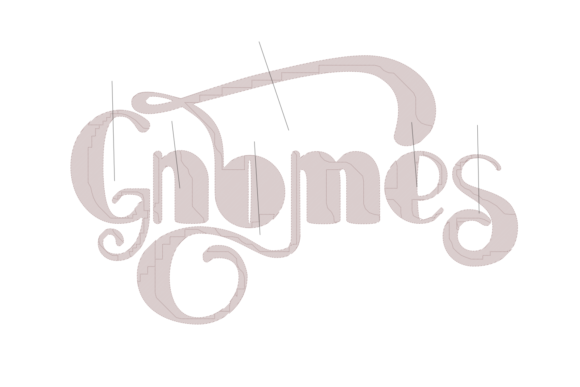
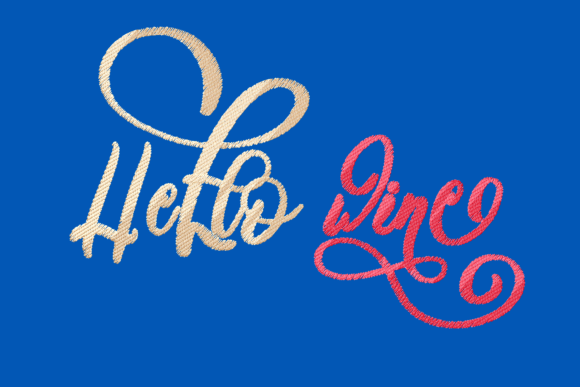
As an embroidery designer who’s prepped over 200 craft fair booths—and watched thousands of shoppers pause, smile, and reach for stitched goods—Hello Wine lands with quiet confidence. It’s not loud or overly clever; it’s warm, approachable, and just the right kind of playful. Think “elegant rustic” meets “modern handmade”—a design that feels both giftable and everyday wearable. The phrase itself is conversational, friendly, and wine-adjacent without leaning into cliché (no grapes, no corkscrews, no cartoonish swirls). That subtlety is gold at a craft fair, where visual fatigue sets in fast and clarity wins.
Where Hello Wine Shines on Real Craft Fair Products
This machine embroidery design thrives where personality meets practicality. Here’s how it performs across your most common handmade product categories:
- Tote bag design: A centered 4–5" Hello Wine on a natural canvas tote reads cleanly from 6 feet away—ideal for booth signage and impulse buys. Works beautifully on both light and mid-tone fabrics.
- Apron embroidery: Positioned above the pocket or centered on the bib, it adds charm without overwhelming function. Especially strong on linen-cotton blends where stitch definition stays crisp.
- Tea towel embroidery: At 3–4", it balances well on the lower corner or hem—enhancing the handmade feel without competing with towel texture. Avoid dense terry weaves unless you reinforce stabilizer.
- Embroidered patch: Excellent candidate for iron-on or sew-on patches. Clean letterforms hold up well when scaled to 2.5–3", making it versatile for bags, jackets, or market aprons.
- Caps and curved surfaces: Use caution here. The straight-line layout doesn’t wrap naturally—best placed flat on the front panel, not the curve. Test hoop placement and tension on scrap first.
- Fabric pouches & pillow covers: Perfect focal point at 3.5–4.5". Adds boutique-level polish to small shop products without requiring complex digitizing.
- Market bags & gift-ready items: Paired with a simple monogram or vine motif (as a companion design), Hello Wine becomes part of a cohesive collection—great for Etsy bundles or holiday gift sets.
What Makes Hello Wine a Smart Craft Fair Investment
It’s rare to find a machine embroidery design that works equally well as a bold statement *and* a refined accent—but Hello Wine does. Its clean, open lettering avoids tight kerning or fragile serifs, so it scales predictably. That means fewer test runs, faster batch production, and consistent results across fabric types. For Etsy sellers and small shop owners, that reliability translates directly to listing velocity: one digital embroidery file can feed multiple product mockups, printable mockups, and real-world samples—all without redesigning.
Photographically? It’s a winner. Crisp contrast between thread and fabric reads well on mobile screens, and the phrase invites natural lifestyle shots—think a linen apron draped over a marble countertop with a wine glass nearby. No forced staging needed.
Careful-Use Notes Every Embroidery Designer Should Check
Even charming designs have limits. Before cutting fabric or loading hoops, verify these practical points:
- Stitch density: If the file includes decorative fills or shadow layers, check for high-density areas—especially in the “o” or “W.” Dense stitching can pucker lightweight cottons or obscure detail on textured tea towels.
- Small lettering: While legible at 3", avoid scaling below 2.25". Tiny “e” or “l” shapes may blur on dark fabric or thick stabilizer.
- Fabric texture matters: On heavy linen or looped toweling, consider simplifying fill stitches or opting for satin-stitched outlines only. Test on your exact fabric—not just muslin.
- Thread colors: The design’s warmth shines with cream, burgundy, charcoal, or olive—but avoid low-contrast combos (e.g., light gray thread on heathered oat fabric) unless intentionally minimalist.
- Hoop size & placement: Confirm the largest version fits your standard hoop. If it pushes boundaries, adjust placement early—especially for caps or curved items where rehooping isn’t practical.
Design Choices That Boost Booth Impact & Buyer Engagement
Your craft fair table isn’t just selling products—it’s selling mood, intention, and shared identity. Hello Wine taps into a relaxed, confident, creative energy that resonates with makers and wine lovers alike. It doesn’t scream “gift”—it whispers “this was made for someone who gets it.” That nuance builds trust faster than any tagline.
When paired with cohesive branding—say, matching tea towel + pouch + embroidered market bag—it strengthens booth display strength and tells a visual story. Customers remember *feeling*, not features—and Hello Wine delivers a moment of recognition, humor, and warmth.
For commercial embroidery or wholesale partners, this design also supports brand consistency: it’s distinct enough to stand alone, neutral enough to fit diverse shop aesthetics—from farmhouse boutiques to modern gift studios.
Final Designer Checklist Before Production
Before committing to 50 tote bags or uploading to your Etsy shop, run through this quick list:
- Test the embroidery file on scrap fabric matching your final product’s weight and weave.
- Check thread contrast under both natural and booth lighting—some metallics or pastels shift dramatically.
- Review spacing between letters—tight kerning can cause thread nesting on slower machines.
- Confirm hoop size compatibility with your embroidery machine and intended product (e.g., cap frame vs. flat hoop).
- Inspect stitch density in curved or filled areas—adjust if needed for your stabilizer type.
- Use cutaway or tear-away stabilizer appropriate for fabric stretch and drape.
- Create at least one real mockup—not just a digital preview—to assess scale, flow, and tactile quality.
- Compare how Hello Wine looks on 2–3 fabric colors side-by-side (e.g., natural, navy, blush).
- Verify commercial licensing terms—especially if selling finished products, not just the digital embroidery file.
Done right, Hello Wine isn’t just another embroidery file—it’s a repeatable, revenue-ready craft fair product that sells itself through sincerity, simplicity, and smart design judgment.