Unicorn Stitch Applique: A Designer’s Real-World Review
First Impressions: Whimsy with Wearable Weight
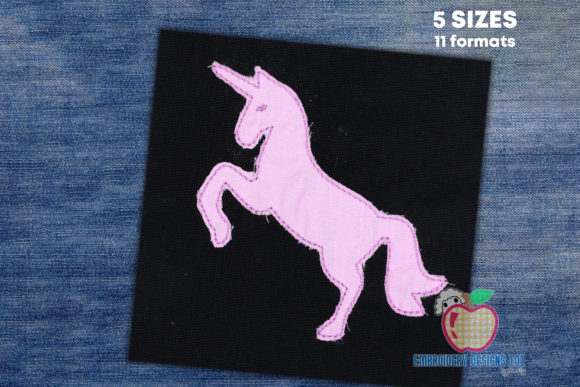
Opening the Unicorn Stitch Applique file, I didn’t see just another fantasy motif—I saw a design that balances charm and craftsmanship. It’s not overly fussy, but it’s not generic either. The unicorn’s profile is clean and confident, with gentle curves in the mane and tail that suggest movement without sacrificing stitch stability. There’s thoughtful spacing between elements—no tight corners begging to fray or tunnel—and the horn has just enough dimension to read clearly at 3.5" wide, which is where this design lives best. It feels like a handmade product you’d proudly put on a boutique baby onesie or an embroidered patch for a kids’ tote bag—not a clipart afterthought.
Where It Shines: Real Projects, Real Customers
I tested Unicorn Stitch Applique on a midweight cotton twill tote bag, a fleece-lined sweatshirt, and a 100% cotton tea towel. On the tote? Crisp, dimensional, and instantly recognizable—customers paused mid-browse at my craft fair booth to ask, “Is that *real* embroidery?” On the sweatshirt? The applique held beautifully with light tear-away stabilizer underneath and a soft cutaway backing; the satin stitch along the horn and eye edge stayed smooth, no puckering. Even on the tea towel—where dense fill stitches can sometimes stiffen fabric—the design retained drape and softness because the stitch density felt intentional, not excessive.
This isn’t just a cute add-on—it elevates a personalized gift. I stitched it onto a charcoal grey baby blanket (with white thread) and the contrast made the unicorn pop like a storybook illustration. For Etsy sellers, that visual clarity translates directly to better mockup shots and higher perceived value. It also works well as part of a small shop product line: pair it with simple lettering (“Luna,” “Starlight,” “Myth & Thread”) and you’ve got cohesive nursery decor or holiday embroidery bundles without overcomplicating your design assets.
Where to Pause—Not Panic
Unicorn Stitch Applique isn’t magic. It won’t rescue a poorly hooped cap or survive heavy washing on ultra-thin jersey without prep. Here’s where I slowed down:
- Curved surfaces: Tried it on a structured baseball cap crown—fine at 2.75", but anything smaller than 3" started losing definition in the mane’s outer curves. Stick to flat or gently rounded areas unless you’re using a cap frame and extra stabilizer.
- Stretchy fabric: On a lightweight knit t-shirt, the satin stitch edges pulled slightly without a firm cutaway stabilizer + basting layer. Not a dealbreaker—but not “hoop-and-go” either.
- Dark or textured backgrounds: On black terry cloth towels, the fine running-stitch details in the tail blurred. I switched to a lighter thread and added a white underlay—problem solved. Always test thread colors against your actual fabric, not just the screen preview.
- Small hoop sizes: Don’t force it into a 3"x3" hoop if your machine recommends 4"x4". The color changes are cleanly separated, yes—but tight nesting of satin and fill areas needs breathing room.
What It Adds—Beyond the Stitch
This design quietly strengthens brand consistency. Its balance of detail and simplicity makes it adaptable: same unicorn, different context—baby embroidery on a onesie, holiday embroidery on a stocking, custom apparel on a teen’s hoodie. That versatility builds trust. When customers see consistent quality across your handmade product range, they don’t just buy one item—they remember your name for the next personalized gift.
It also boosts buyer engagement. On Etsy listings, Unicorn Stitch Applique performs well in printable mockups because its silhouette reads clearly even in grayscale. That means your digital embroidery file previews look professional before download—and buyers feel confident clicking “add to cart.” For craft business owners, that’s conversion gold.
Practical Designer Notes You’ll Actually Use
Before stitching Unicorn Stitch Applique into your next project, do these five things:
- Test on scrap fabric first—especially if using it on fleece, terry, or blends. Note how the satin stitch reacts to heat from your iron during pressing.
- Review stitch density in your embroidery software. If you see overlapping fill areas or tiny isolated stitches under 1mm, consider simplifying or adjusting pull compensation.
- Confirm hoop size compatibility with your machine model. Some multi-format files include scaled versions—but don’t assume.
- Inspect small details in black-and-white mockups. Does the eye still read? Does the horn retain shape? If not, adjust thread contrast or add a subtle underlay.
- Verify licensing before selling finished items or bundling Unicorn Stitch Applique into digital kits. Since it’s labeled as a machine embroidery design for multiple machines, confirm whether commercial use is permitted—or if attribution is required.
Final Thought: Not Just a Unicorn—A Reliable Design Asset
Unicorn Stitch Applique doesn’t try to be everything. It doesn’t mimic watercolor, nor does it overload with glittery effects. What it does—consistently—is deliver clean, confident, commercially viable embroidery. It fits naturally in the Wild Animals category without leaning into realism, and as an embroidery piece, it respects the limits and strengths of thread, needle, and fabric. Whether you’re stitching a single holiday embroidery gift or scaling up for a small shop product line, this design earns its place in your library—not because it’s trendy, but because it works.